Grand Innagural OFFER: 50% discount on all products and services!

The Smart Watchman
Unpacking the Power and Uses of IP Cameras
Manickam K, Agna Security Solutions
1/7/20262 min read
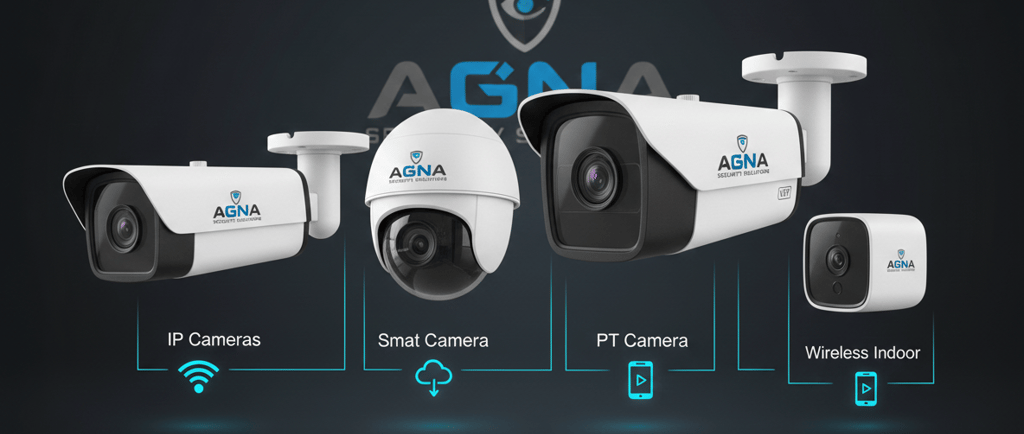
In the ever-evolving world of security, one technology stands out for its flexibility, clarity, and advanced capabilities: the IP Camera. Short for Internet Protocol Camera, these smart devices have revolutionized how we monitor and secure our homes, businesses, and public spaces, moving far beyond the capabilities of traditional analog CCTV systems.
But what exactly is an IP camera, and why has it become the go-to choice for modern surveillance?
What is an IP Camera?
At its core, an IP camera is a digital video camera that sends and receives data via a computer network and the internet. Unlike old-school analog cameras that required dedicated coaxial cables to a DVR (Digital Video Recorder), IP cameras can connect wirelessly via Wi-Fi or through standard Ethernet cables, similar to how your computer or smartphone connects to the internet. Each IP camera has its own unique IP address, allowing it to act as an independent network device.
Key Advantages of IP Cameras:
Superior Image Quality: This is perhaps the biggest draw. IP cameras offer significantly higher resolutions, ranging from 1080p (Full HD) to 4K and even beyond. This means sharper, more detailed images and videos, making it easier to identify faces, license plates, and critical details.
Remote Accessibility: Since they're network-connected, you can view live footage and recordings from anywhere in the world using a smartphone app or web browser, provided you have an internet connection.
Advanced Analytics: Many IP cameras come equipped with built-in intelligence. This includes features like motion detection, facial recognition, object tracking, line crossing detection, and even heat mapping. These analytics turn your camera into a proactive security guard, sending alerts only when necessary.
Simplified Installation (Especially PoE): Power over Ethernet (PoE) IP cameras can receive both power and data through a single Ethernet cable, simplifying wiring and reducing installation costs. Wireless IP cameras further reduce cable clutter.
Scalability: IP camera systems are highly scalable. You can easily add more cameras to your network without needing to overhaul your existing infrastructure.
Two-Way Audio: Many models include built-in microphones and speakers, allowing for two-way communication – perfect for deterring intruders or communicating with delivery personnel.
Digital Zoom: High-resolution footage allows for significant digital zooming without pixelation, letting you zero in on specific areas of interest.
Versatile Usages of IP Cameras:
The flexibility and power of IP cameras make them suitable for a vast array of applications:
Residential Security:
Monitoring entry points, gardens, and living areas.
Keeping an eye on pets or children (as a smart baby monitor).
Receiving alerts for package deliveries or suspicious activity when you're away.
Integrating with smart home systems for unified control.
Business Surveillance:
Retail: Preventing shoplifting, monitoring customer traffic, overseeing cash registers, optimizing store layouts using heat maps.
Offices: Securing sensitive areas (server rooms), monitoring employee activity, ensuring visitor safety at reception.
Warehouses & Factories: Asset protection, monitoring production lines, ensuring worker safety, perimeter security.
Restaurants & Hospitality: Overseeing dining areas, kitchens, and cash handling points to enhance service and prevent theft.
Public Safety & Infrastructure:
Traffic Monitoring: Managing traffic flow, detecting accidents, monitoring public transportation.
Smart Cities: Used in conjunction with AI for urban planning, crowd management during events, and general public security.
Remote Site Monitoring: Securing construction sites, remote power stations, or agricultural fields where traditional surveillance might be difficult.
Niche Applications:
Wildlife Monitoring: Capturing animal behavior in remote locations.
Scientific Research: Observing experiments or environmental changes.
Educational Institutions: Campus security, monitoring classrooms and common areas.
In essence, IP cameras are more than just recording devices; they are intelligent surveillance solutions that offer unparalleled clarity, control, and analytical power. By leveraging network technology, they provide peace of mind and actionable insights, making them an indispensable tool in our increasingly connected world.